Since its 19th-century independence wars from Spain, Latin America has embraced caudillismo: a political system headed by charismatic, personalist leaders unafraid to obtain power by force. The caudillos of the 19th century were military strongmen who challenged colonial authority, directly shaping the national identities of their nascent countries. Over the centuries—even with the end of independence wars and the region’s shift toward more dispersed, democratic power—caudillismo has persisted in Latin American politics. The caudillos of the 20th and 21st centuries can be found both on the left (Fidel Castro, Hugo Chávez, Juan Perón) and on the right (Fulgencio Batista, Augusto Pinochet).
In the last decade, however, the face of caudillismo has changed. Latin America sees a surging wave of leaders who combine the populist campaigning strategies of previous left-leaning caudillos with the right-wing authoritarianism of those on the right. And, despite the region’s much heralded “pink tide” of left-leaning governments in the early 21st century, these young and tech-savvy caudillos mark a sharp rightward turn. Apart from differences in specific policies, these leaders are jointly motivated by issues of security, economy, and representing neoliberalism on the international stage.
New Caudillos, New Strategies
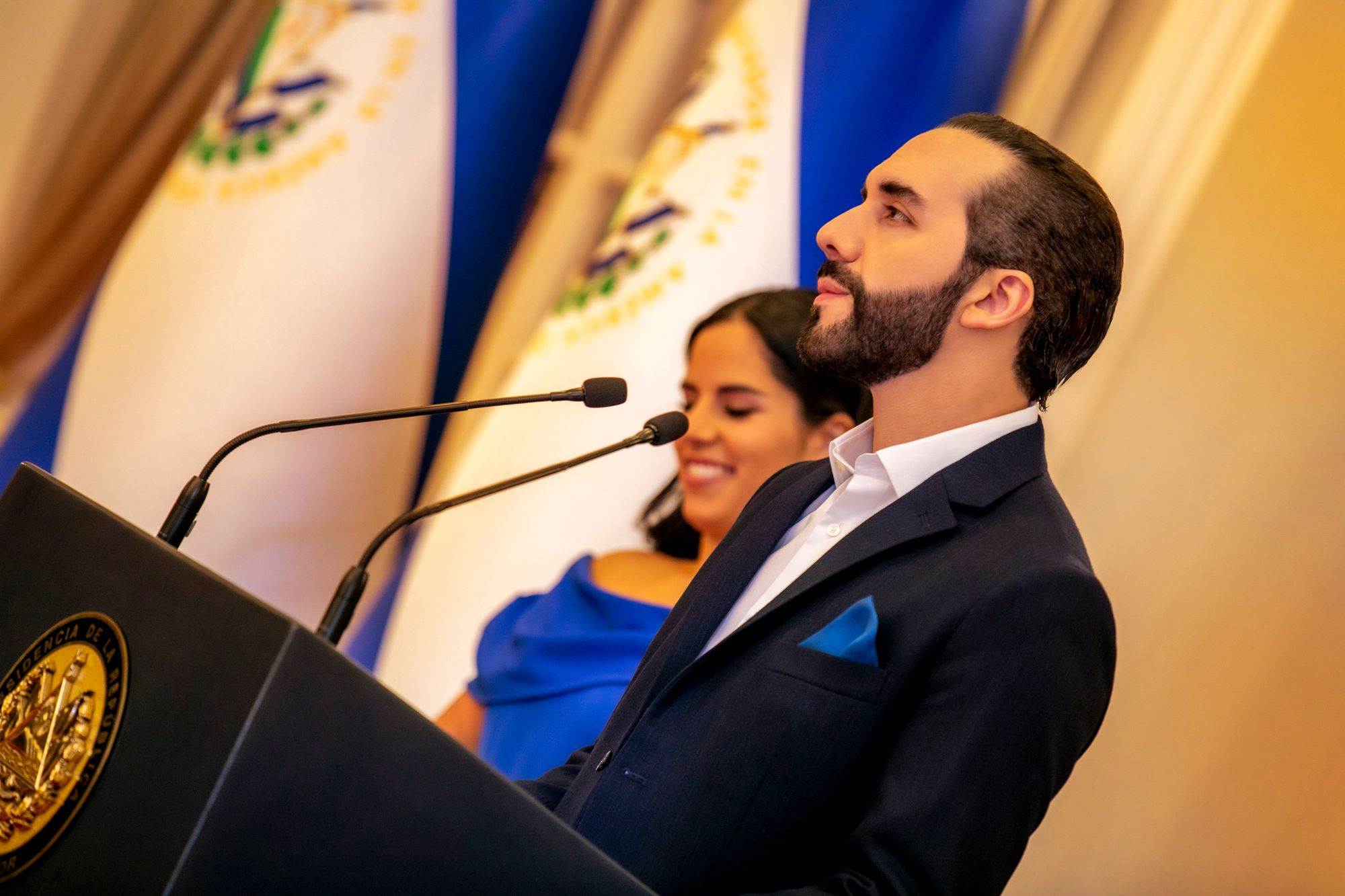
Naybib Bukele, the self-proclaimed “coolest President in the world” from El Salvador, is perhaps the blueprint for the new wave of caudillismo. First taking office in 2019 at only 37 years old, Bukele’s path to the presidency was an unlikely one. He began his political career with the leftist FMLN (Farabundo Marti National Liberation Front). After being expelled from the party for publicly criticizing leadership and sowing intra-party divisions in 2017, he pivoted to the conservative GANA (Great Alliance for National Unity) party for his presidential run. Early on, Bukele distinguished himself as a vocal critic of the political establishment.
Bukele, a former marketing executive, took advantage of social media to build a new political platform for himself. Shortly after his FMLN expulsion, Bukele took to Facebook Live to announce the creation of the Nuevas Ideas (“New Ideas”) party. Nevertheless, he had to campaign with GANA for his 2019 run when he could not secure accreditation in time. Nuevas Ideas would gain power, however, when in 2014, he was re-elected by a landslide majority, receiving 70.25 percent of the votes while running with the party. The Salvadoran president’s success owes itself to his unabashed effort to target young voters: Bukele is active on TikTok and X (formerly Twitter), has adopted eccentric titles like “instrument of God” and “Philosopher King,” and has declared Bitcoin legal tender.
Bukele’s success has resonated across Latin America as many politicians strive to emulate his strategies. Namely, Argentina’s president, Javier Milei, secured victory in a 2023 runoff election against the center-left economy minister, Sergio Massa. A self-proclaimed “anarcho-capitalist,” Milei filled la grieta (“the chasm”), what Argentines called the traditional cycle of political competition between the center-left and center-right.
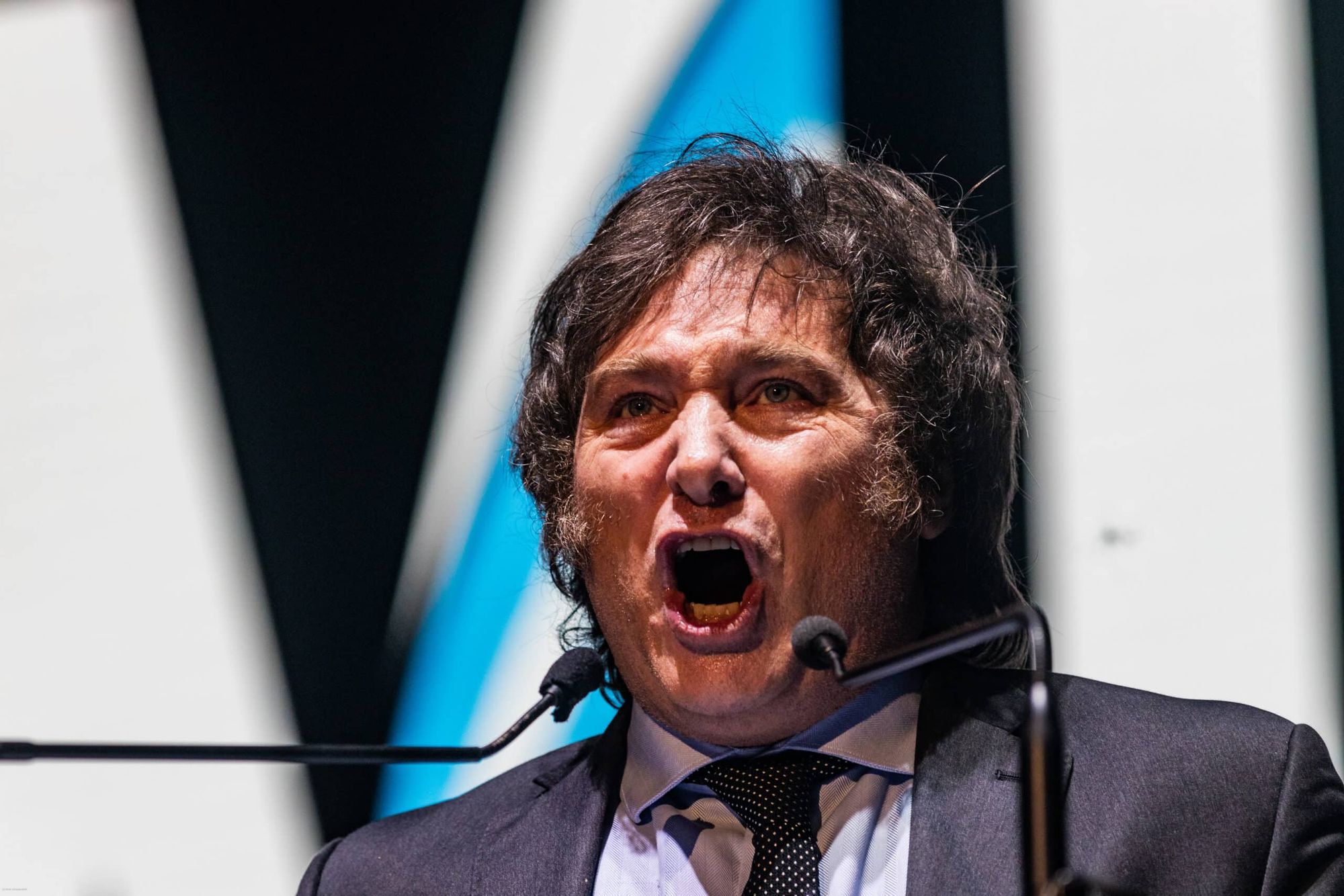
A social media-heavy campaign aimed at young voters fueled Milei’s success, just as it did Bukele’s. Milei boasts 1.5 million followers on TikTok, supported by a growing network of young right-wing Argentine influencers like Tomás Jurado—owner of YouTube channel El Peluca Milei (“Milei’s Wig”) in his early 20s—and 21-year-old Adriel Segura, who posts about economics and politics on YouTube and TikTok. The results of this strategy are astounding, with 70 percent of young voters backing Milei in the November 2023 election; notably, young men constitute a higher proportion of this number than their female peers.
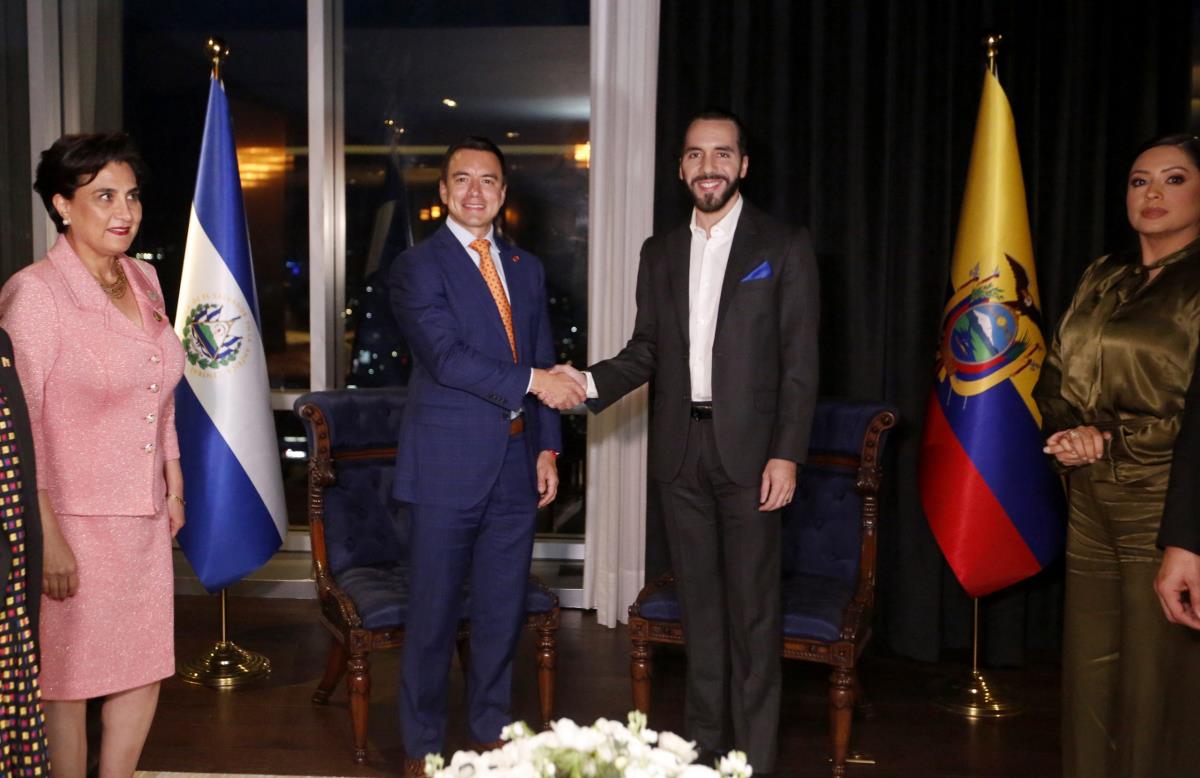
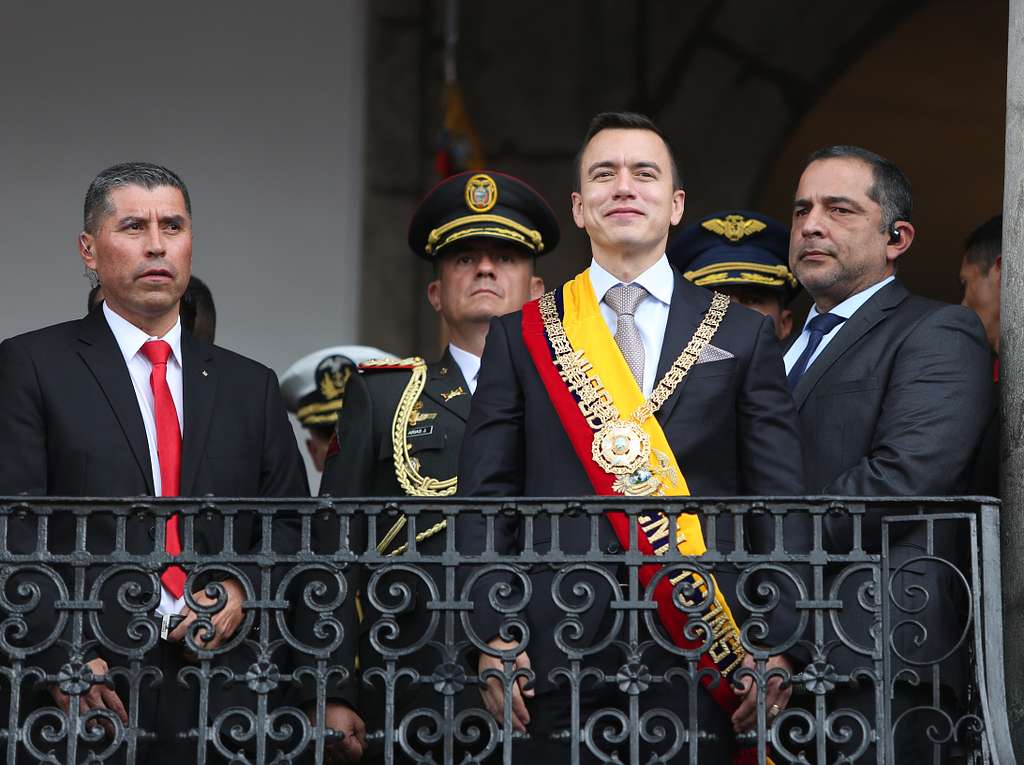
Even Daniel Noboa, the Miami-born president of Ecuador elected in 2023, has adopted Bukele’s trademark strategies despite his personal disdain for the Salvadoran president. His social media posts display clips of him working out with his influencer wife, and he is often seen donning a casual leather jacket reminiscent of Bukele’s
Seizing Instability with the Iron Fist
But the anti-establishment nature of this new generation of caudillos manifests in more than party allegiance and social media marketing. Their rise to power also marks an almost post-ideological invocation of pragmatism. Bukele, Milei, and Noboa have seized their respective countries’ instability—social and economic—to justify the iron-fisted approach that underlies their platforms.
For Bukele and Noboa, this means embracing the mano dura (“firm hand”), which describes a tough-on-crime policy that emphasizes eliminating organized crime. Security features as a top concern in almost every Latin American country: in Mexico, 70 percent of citizens cited crime or violence as a top concern in 2023, in Costa Rica, 63 percent, and in Chile, 62 percent. But this pattern was especially clear in El Salvador and Ecuador due to the prominence of organized crime.
El Salvador was known for years as the “murder capital of the world,” with a homicide rate of 106 per 100,000 inhabitants in 2015. Two major gangs, MS-13 and Barrio 18, dominated the country. When Bukele stepped into office, he promised to address this ongoing problem. The Salvadoran president would go on to architect the carceral model, which could come to be known as the “Bukele Model.”
In 2022, the Legislative Assembly passed a state of exception on the president’s request. This state of exception includes expanding security forces, but also suspending various constitutional guarantees relating to due process. At the heart of Bukele’s security campaign is a multimillion-dollar mega-prison called the Terrorism Confinement Center. These policies have been effective at reducing the homicide rate—in 2024, El Salvador’s homicide rate was only 1.9 per 100,000 people—but risk exacerbating human rights violations. El Salvador’s incarceration rate is the highest in the world, with 1.7 percent of its population in prison.
Noboa has applied the “Bukele Model” in his own Ecuador, where transnational crime organizations have similarly taken root over the past five years alongside a rapidly expanding drug-trafficking industry. Only two months after taking office, Noboa declared an “internal armed conflict” against 22 criminal groups he labelled terrorist organizations. This declaration enabled the military to patrol prisons and streets.
Additionally, the Ecuadorian president subsequently passed a law allowing drop-of-a-hat raids and asset seizures, as well as increasing sentences for organized crime offenses. Noboa further announced that he would build a new prison in Ecuador, working with the same people and companies that engineered Bukele’s Terrorism Confinement Center. While these policies have reduced the homicide rate from 46.18 per 100,000 people in 2023 to 38.76 per 100,000 people in 2024, they also pose various human rights concerns, like unconstitutional invasion of privacy and inhumane prison conditions.
While Bukele and Noboa tackled crime, Milei vowed to tackle Argentina’s chronic hyperinflation. When Milei took office in December 2023, month-to-month inflation was at 25.5 percent while the annual inflation rate was at 211 percent. Targeting fiscal deficit, the economic libertarian often brandishes a chainsaw as a symbol of his extreme budget cuts. His approach has delivered some key results: inflation has fallen sharply as the government posts its first budget surplus in 14 years, and the Merval stock index—which tracks two dozen of Argentina’s most valuable listed companies—has risen by 140 percent. But Milei’s economic program also comes at the cost of many: cuts to state spending have dwindled funding for universities and public infrastructure, leading public sector salaries to fall by over 15 percent in real terms in the year after Milei took office.
Increasing State Capture
As iron-fisted governance continues to consolidate and expand executive power across Latin America, the risk of state capture—a hallmark of many authoritarian regimes—grows significantly. By framing their policies as essential solutions to national crises, these leaders have systematically undermined institutional checks and balances while curtailing civil liberties.
As part of his mano dura policy, Bukele consolidated El Salvador’s 262 municipalities into only 44. This move reduced the number of elected officials and made it more difficult for opposition parties to secure victory in smaller municipalities. Local governance was further weakened as power was concentrated in the executive branch.
A growing hold on the judiciary accompanies this reorganization of government: in 2021, Nuevas Ideas secured a supermajority in Congress, allowing Bukele to remove the attorney general over his alleged affiliation with an opposition party and constitutional court judges who ruled against his pandemic-related actions. These figures were then replaced by Bukele’s allies. Like many authoritarian leaders, Bukele has also used his power to rewrite the rules in his favor: the Salvadoran president bypassed the constitution to secure his reelection, despite six articles upholding a term limit of five years.
Meanwhile, Milei has used his economic agenda as a vehicle for hollowing out the welfare state and curtailing civil liberties. Argentina once possessed an extensive, free public health system that ensured access for those who couldn’t afford private insurance. Since taking office, however, Milei slashed Argentina’s healthcare budget by 48 percent in real terms—firing over 2000 Health Ministry employees who make up nearly a quarter of its workforce. These actions set the context for the Argentinian president’s attack on abortion access, as he seeks to cut the free provision of contraceptives and abortion pills by the public health system.
Of course, not all caudillos equally undermine democracy. Noboa stands out as a more level-headed leader. When not focusing on crime, the Ecuadorian president has underscored the importance of “promot[ing] public health and strengthen[ing] public education” in his platform—preferring to associate himself with the more moderate Emmanuel Macron and even the socialist Lula over Bukele. Noboa has also affirmed his intent to respect democratic norms, stating: “I won’t stay one second more than what the constitution allows me. I will never ignore the importance of a parliament or the judicial branch, and I cannot go against the Constitutional Court. That is what keeps this country civilised.”
A Global Right-Wing Axis
But these new caudillos do more than simply emulate one another’s strategies separately in their respective countries. Their convergence around digital populism and strongman governance instead reflects their participation in an emerging transnational right-wing axis. In January 2025, both Javier Milei and Daniel Noboa attended U.S. President Donald Trump’s presidential inauguration—an unprecedented move in modern diplomatic protocol. While foreign ambassadors and dignitaries have historically been present at such events, no foreign head of state had ever made an official visit for the occasion. Their attendance signaled the growing power of this global conservative alliance.
Nowhere is this alliance more materially evident than in the relationship between Trump and Bukele. During Trump’s first term, the United States paid Bukele’s government to detain migrants deported from the United States, effectively turning El Salvador into an offshore extension of Trump’s anti-immigration regime. In exchange, Bukele’s increasingly authoritarian tactics were not only tolerated but tacitly encouraged. His administration earned praise from US conservatives for its heavy-handed crackdown on gangs, yet reports suggest that this tough-on-crime image concealed secret negotiations with MS-13. According to investigations, Bukele’s government offered financial incentives and political concessions to the gang in exchange for a drop in homicides and electoral support—deals that may have been subsidized by redirected US aid.
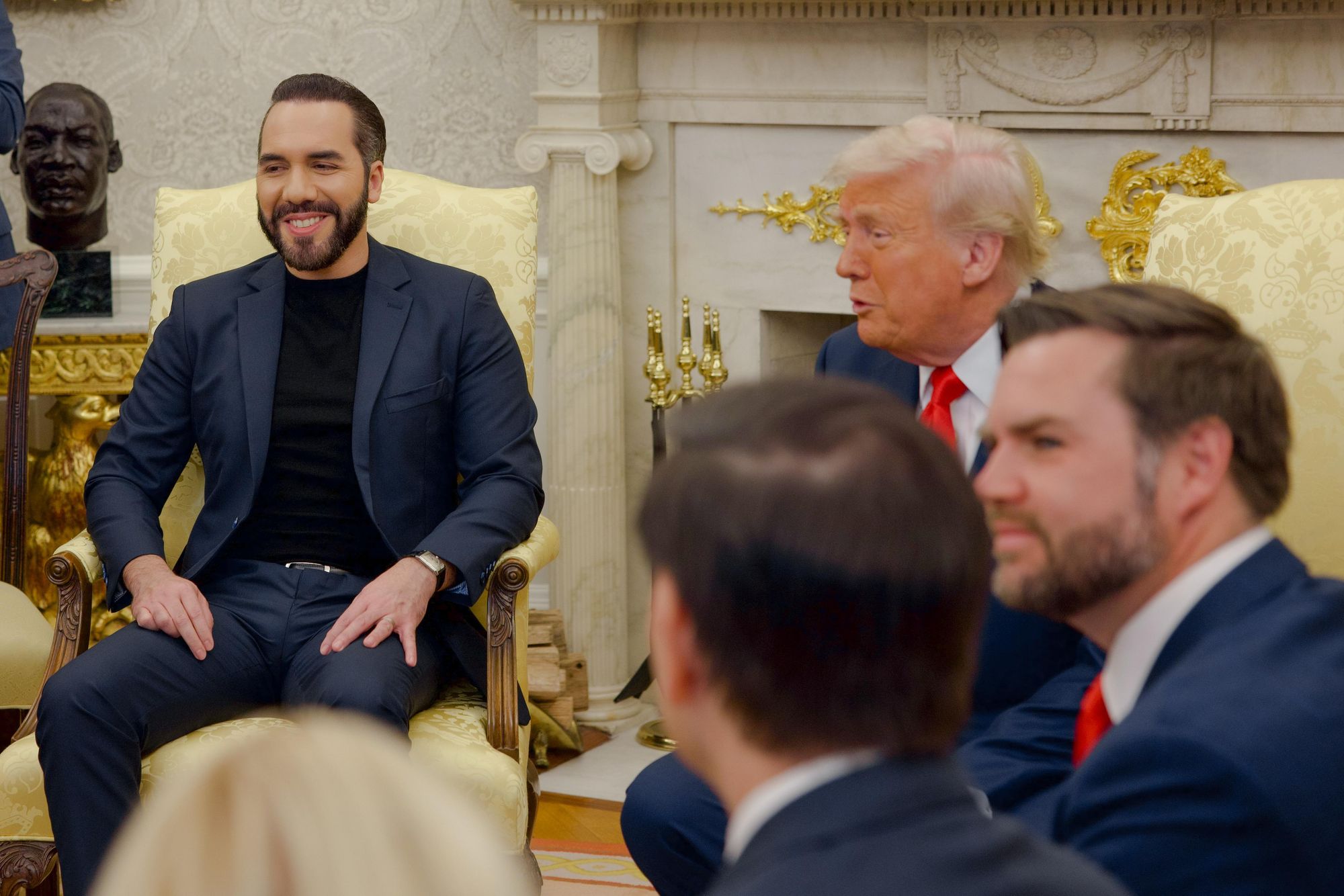
Noboa followed a similar path, forging a close partnership with Trump that mirrors Bukele’s transactional alignment. In the early stages of his political career, Noboa positioned himself as a willing ally of the American right. In March 2025—just weeks before a tightly contested runoff election—he traveled to Florida to meet with Trump. After Noboa’s victory, Trump reciprocated by sending a high-profile US delegation led by Robert F. Kennedy, Jr. to attend the inauguration in Quito.
Since assuming office, Noboa has announced a “strategic alliance” with Erik Prince, the founder of Blackwater and a longtime Trump confidant, to tackle crime and narcotrafficking. He has also pushed to reintegrate US military infrastructure into Ecuador, advocating for the return of foreign bases and preparing the coastal city of Manta, home to a former U.S. air base shut down in 2009, for American troops.
Milei, too, has cemented himself as a key figure in the Trumpian orbit—earning the title of Trump’s “favorite president” and becoming the first foreign leader to visit him after his 2025 inauguration. Unlike Bukele and Noboa, whose alliances with Trump are rooted largely in security cooperation, Milei has embraced a more overt ideological partnership centered on culture war politics and symbolic policy alignment. In the wake of Trump’s decision to exit the World Health Organization, Milei promptly announced Argentina would follow suit. He has echoed similar gestures on climate and foreign policy: after Trump pulled the United States out of the Paris Agreement, Milei’s government said it was reviewing Argentina’s participation.
At the center of Milei’s international agenda is a vociferous culture war campaign: he has toured the globe attacking feminism, trans rights, and “woke ideology,” styling himself in parallel to Trump and as defending Western civilization. Nowhere is this more symbolically clear than in Milei’s decision to move Argentina’s embassy in Israel from Tel Aviv to Jerusalem by 2026, joining only a handful of nations that recognize Israeli sovereignty over the disputed city—putting Argentina at odds with the longstanding international consensus in yet another show of far-right solidarity.
Conclusion
The changing face of caudillismo is more than a temporary trend in regional politics. As democracy falters around the world, it signals the emergence of a more alarming global right-wing axis. Leaders like Bukele, Milei, and Noboa are not merely reshaping power at home; they are aligning with a broader international movement that repackages authoritarianism for a generation disillusioned with traditional politics. Within this network, Latin American strongmen have become key architects of an exportable model that threatens to erode democratic norms. As they deepen ties with figures like Trump, Italy’s Giorgia Meloni, and Israel’s Benjamin Netanyahu, they are helping to assemble a growing bloc capable of reshaping the terms of international consensus—and advancing a vision of governance rooted in repression, spectacle, and control.