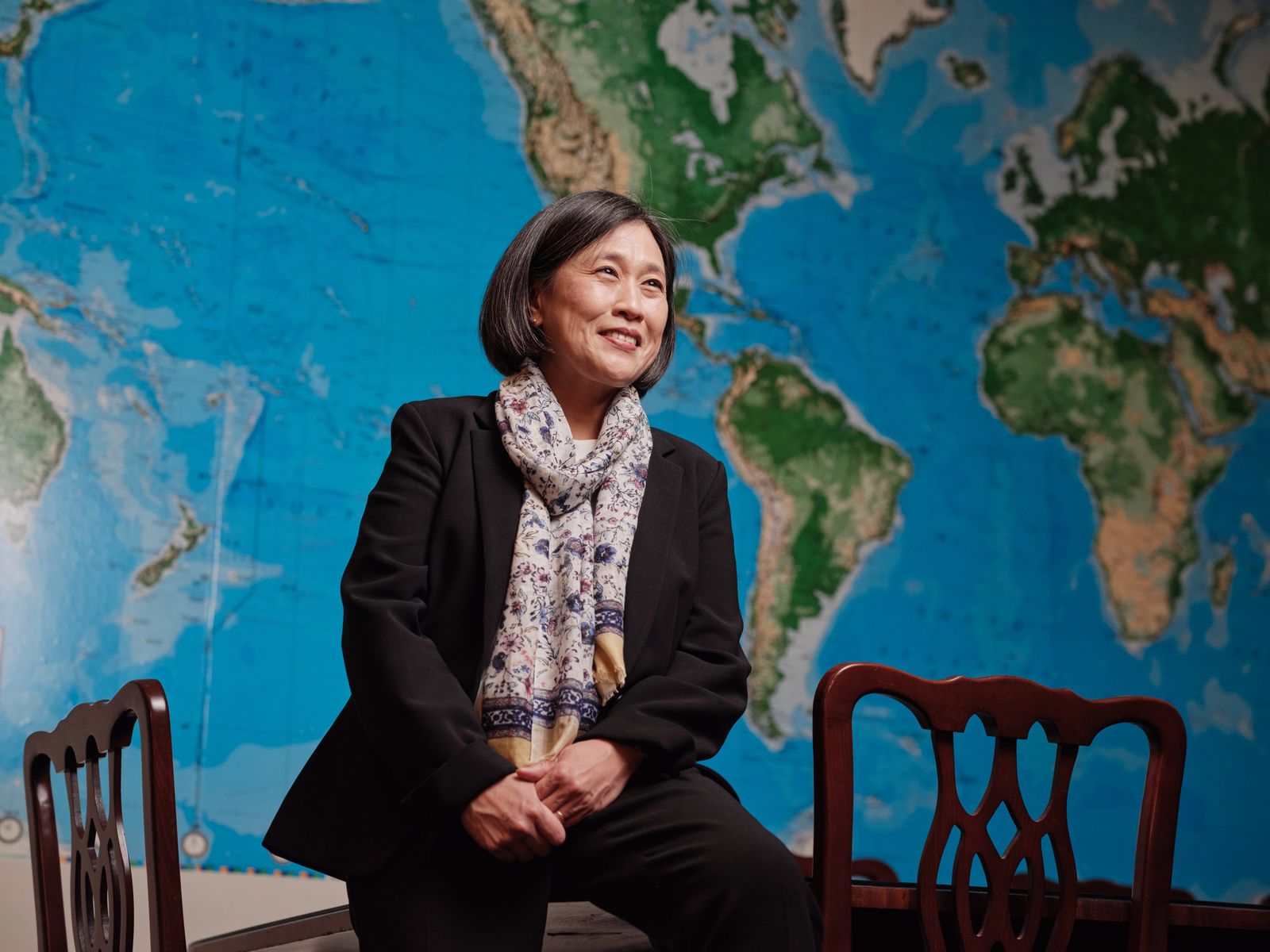
Katherine Tai is a seasoned diplomat and expert in international economic policy who served as the 19th U.S. Trade Representative under President Biden. From 2021 to 2025, she led America’s first worker-centered trade policy, championing labor rights and equitable global trade. During her career, she helped negotiate the U.S.-Mexico-Canada Agreement and previously served as Chief Trade Counsel for the House Ways and Means Committee.
You served as Trade Representative for the US from 2021 to 2025. Could you tell us about the position of Trade Representative?
Many of us in the Biden administration, especially on the economic side, saw our mandate as bringing change and reform to economic policy, and that included what we were doing at the US Trade Representative’s Office [USTR]. This is really unusual because the office I led is a small agency tucked inside the greater White House complex. It has about 275 people and a budget of about US$70 million. Most of the resources go to employees and travel.
USTR negotiates trade agreements, represents the United States at the World Trade Organization, APEC [the Asia-Pacific Economic Cooperation Forum], and the G20 trade track. Fundamentally, what USTR is supposed to do is self-explanatory: the US Trade Representative and the office are charged with representing the interests of the United States in trade. Under its founding statute, the USTR is the principal advisor, negotiator, and spokesperson on US trade policy.
What are some of the accomplishments you are proud of from your time there?
The challenge we faced is that USTR was created in 1962, and most Americans, whom USTR is supposed to represent, do not even know it exists. Yet USTR is very well known to the most powerful entities in the US economy, which are our biggest, most well-resourced corporations.
One change we tried to bring was analogous to what Chair Lina Khan was doing at the Federal Trade Commission: pushing our agency out into the country, traveling, engaging with ordinary Americans, and introducing ourselves. We wanted people to know that we exist and that we are charged with representing their interests.
This task meant learning about their economic aspirations and anxieties. Traditionally, USTR has been comfortable staying in Washington, known only to those who already know how to find it. But how can you represent the interests of the rest of America if you never talk to them? If they don't even know that you exist, or how to find you?
Another part of our change agenda was to examine the legacy of US trade policy since the 1960s. The impacts have been positive for those at the top, coastal economies, and large corporations, but not for everyone. If you ask people who might have been hurt by our trade policies, at the top of that list will be worker organizations and environmental organizations. We saw a rush to generate wealth without considering the negative externalities inflicted on people and the planet.
We believed it was time for a new kind of trade policy, one that placed workers at the center. By “workers,” we also meant a proxy for the planet, for climate, and for everyone marginalized by previous trade policies. We invited them to help us change course.
We also saw the legacy of the first Trump administration, especially in trade, as a break from tradition that we welcomed, in part. We saw that break as an opportunity when we came into office to further change the course of US trade policy, but aligned with the vision that is pro-worker, pro-democracy.
Prior to your role as Trade Representative, you worked in the Committee on Ways and Means, playing a critical role in negotiations on the United States-Mexico-Canada Agreement. Could you tell us about that process?
The US-Mexico-Canada Agreement, or USMCA, is essentially a reborn version of NAFTA, the North American Free Trade Agreement. NAFTA has never been popular with Democrats, and it has been particularly unpopular with American labor unions and American environmental organizations who felt like everything they predicted was going to happen happened with NAFTA: the rich got richer, but workers lost power, and jobs were offshored to Mexico. The pie overall expanded, but the power of workers to stand up for themselves and improve their conditions was eroded.
When Donald Trump campaigned in 2016, he criticized US trade policies, including NAFTA, and gained traction among traditional Democratic voters. Once in office, he scrapped the Trans-Pacific Partnership and began renegotiating NAFTA with Canada and Mexico. Many Republicans saw this as an opportunity to modernize NAFTA, but Trump’s motivation was deeper. He wanted to renegotiate it or tear it up, because it was fundamentally problematic. It was fundamentally flawed, and on that there was overlap with this long standing democratic critique.
By late 2018, the Trump administration had finished renegotiating, but Democrats won back the House that fall. Speaker Nancy Pelosi and Chairman Richard Neal of Ways and Means, my old boss, told the White House that the deal would not reach the House floor unless it was reopened and renegotiated.
2019 becomes a very dramatic year where we are renegotiating the already renegotiated NAFTA, with this renegotiation now being between congressional Democrats and the Trump administration. As Chief Trade Counsel for the Ways and Means Democrats, I had the privilege of helping lead those negotiations. They were tough, but by December 19, 2019, we had secured improved labor and environmental standards, stronger enforcement mechanisms, and better access-to-medicine provisions.
When the bill came to the House floor, more Democrats voted for it than Republicans—193 Democrats and 192 Republicans, for 385 yes-votes. A month later, 89 Senators supported it, and it became law. As a reward for my role in that process, I was later selected as US Trade Representative in the Biden administration. As strange as it sounds, I owe part of my path to that moment.
Before your role in the House, you spent time in the Trade Representative’s Office of General Counsel, focusing on China. Should Americans worry about China’s growing role in the global trade economy?
Americans absolutely should be concerned about the relationship with China. The United States and China are the two largest economies in the world so how we trade with each other determines everything for us here in America and [for] everybody in China. To go one step further, how we relate to each other and trade with each other has direct implications for everybody else in the world too.
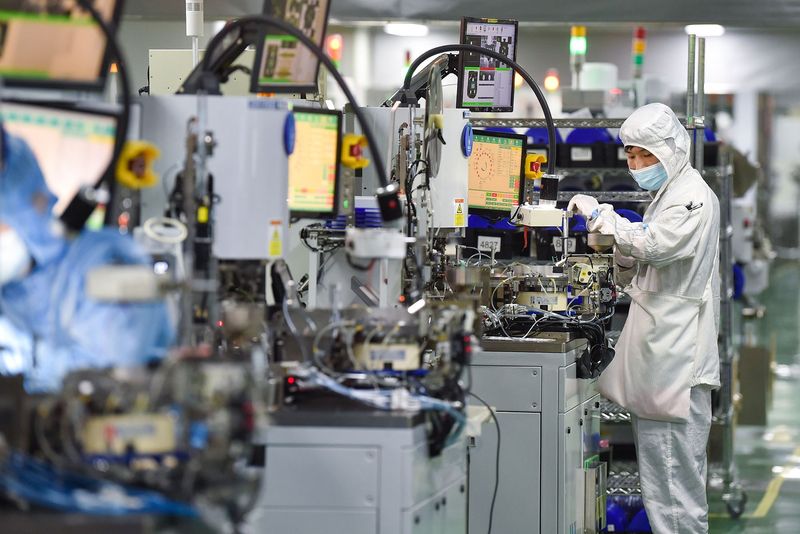
Look at how we got to where we are today: with a lot of rage and disaffection that is focused on trade, levels of inequality in the American economy, and frustration that the American Dream is no longer achievable. I think a lot of it is about this version of globalization, about economic choices we have made around trickle-down economics. There is some really important work done by a set of economists called the “China Shock,” where they look at the 10 years after China entered the WTO and the loss of manufacturing, manufacturing jobs in the United States where those losses happened, and what happened to the people who lost those jobs. Even when they were able to get new jobs, they were generally less well paying jobs, jobs with worse benefits. Moreover, those localized harms were never adequately addressed, and parts of America became worse and worse off, and if that is attributable to China's rise and development, then we really need to be very, very attentive today to how we trade with China.
Tariffs have become a recurring theme in the news cycle with President Trump’s actions as we’ve discussed. What do you think the American public, or even politicians, don’t understand about tariffs?
There are a lot of emotions that are attached to tariffs on both sides. Some people associate tariffs with government interventions that in the past have helped to save their jobs for a couple of years, or helped to save their industries for a couple of years at a time. There are some people who view tariffs very negatively as getting in the way of affordability, or getting in the way of their access to things that come from other countries.
What people don't understand about tariffs is that tariffs themselves are just a policy tool. The feelings around tariffs shouldn't actually be feelings about tariffs,they should be feelings about the policies and the motivations of the people who are using the tariffs. Tariffs themselves may be appropriate or inappropriate at different times. It all depends on what the market conditions are, what the products are, and what you are trying to accomplish. I would really love to see us in the world and we might get there, because I don't think the tariffs are going away.
I'd like to see the debate around tariffs evolve beyond the question of if tariffs are good or bad and get into what we are trying to accomplish. Are tariffs the appropriate tool? Should they be used with other measures? At what level they should be applied? It's not a yes or no, on or off question. The real question is, what lies behind the tariffs?
Looking beyond North America, the Trump administration has unleashed waves of tariffs, which some argue are part of a strategy to prioritize America by disconnecting it from the world and becoming less reliant. What role do you see the U.S. having in global trade? Is there a true death of globalization?
I see the role of America in the global trading system as fundamentally changing. I think it has been changing for a long time. It started changing under the first Trump administration. Joe Biden and his administration continued to try to change it, but to direct it towards a more pro-worker, pro-democracy, and pro-competition direction. Now, with the second Trump administration, the right has come back with a continued change agenda, but in what they call an America-First direction.
I think America-First and worker centrism are actually distinct concepts, but what they have in common is that they are both breaking from tradition. More and more the rest of the world is starting to properly appreciate that the world economy and the role of America in it is changing. Throughout the Biden administration, there were a lot of our trading partners who actually thought maybe we could go back to the status quo.
In terms of globalization, trade is a thing that human beings have been doing for as long as there has been more than one human being alive. It is a fundamental aspect of the way we engage, a fundamental aspect of our civilizations. With that in mind, I think it's fair to say that there has always been some form of globalization, and that globalization has evolved alongside human history. Up until the early 20th century, we saw imperialism and colonialism. That is a version of globalization. Of course, globalization has changed, and the version we are experiencing right now, it's probably been evolving slowly over decades. Right now, it is indisputable that we were going through a period of fundamental and much more accelerated change.
Is Trump facilitating this, and how is he doing so, or not?
The Trump phenomenon is catalyzing certain change, but I think that President Trump and this phenomenon in trade and globalization can also be legitimately seen as a product of this earlier version of globalization. Some of its excesses and some of its harms, which have been allowed to become elaborated over the past couple decades, have landed us in this period of disruption. In regards to this Trump administration, I see it both having a role of causation and acceleration, but also in itself, as a symptom.
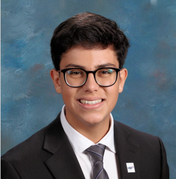
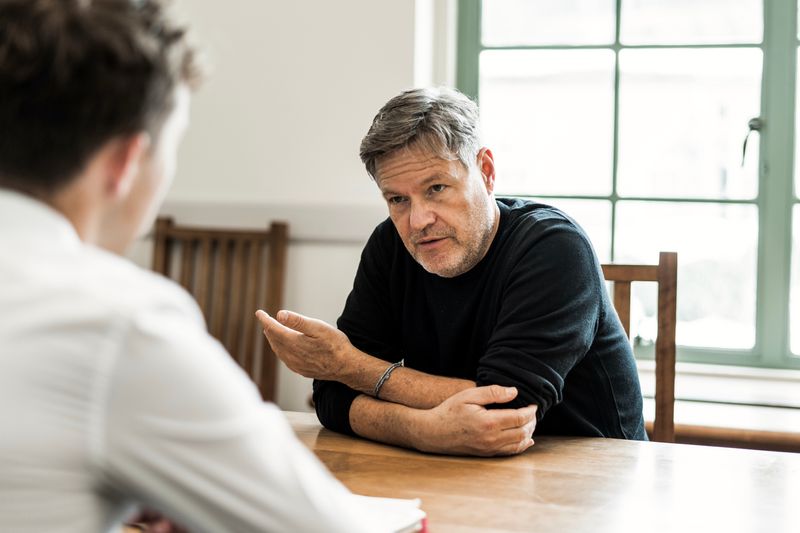
Tai spoke with Wulff on November 5, 2025. This interview has been lightly edited for length and clarity.
The views expressed in this piece are the interviewee’s own and are not reflective of the views of the HIR.