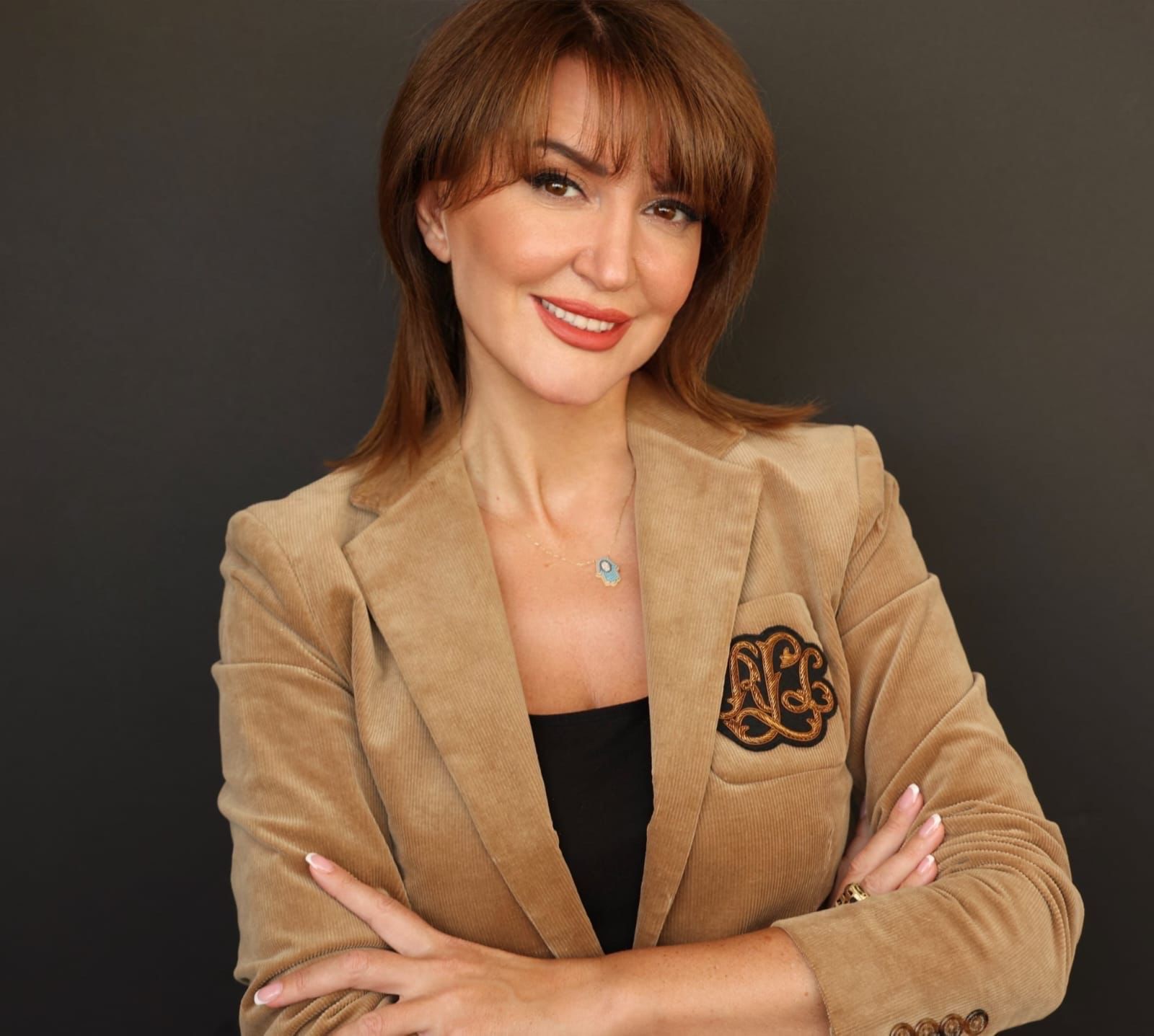
Madam Atifete Jahjaga served as Kosovo's fourth president from 2011 to 2016. She started her career in the military, attaining the rank of Major General of the Kosovo Police. Being just 35 years old when she was elected President of the Republic of Kosovo, Madam Jahjaga was the youngest head of state in the Balkans. During her time in office, Madam Jahjaga was a crucial advocate for greater international recognition of Kosovo’s independence, its involvement in international organizations, women’s empowerment, and post-war reconciliation. Today, she continues her work as a servant of the people through the Jahjaga Foundation.
In 2008 Kosovo declared its independence and only three years after, in 2011, you became its President, the first to actually serve a full five-year constitutional term. As you look back at this tumultuous and formative period, what was the main challenge in shaping the role of the head of state in Kosovo at home and abroad?
I became the President of Kosovo just three years into its statehood. At the time, the country was going from one emergency to another. In 2010, we went through our first post-independence parliamentary elections, which were assessed quite negatively by the international and local monitoring missions and were followed up by a partial rerun. I am proud to say that this was not the case four years later, when Kosovo was used as one of the best examples in its neighborhood of how to hold free and fair elections. To this day, Kosovo has been able to maintain this level of democratic performance.
I myself, however, assumed office in the midst of a deep political crisis, after two successive presidents stepped down following Constitutional Court rulings that they were in breach of the Constitution. My election thus made history in a number of ways. It was the first time that a non-partisan candidate had been nominated as the head of state. I was also the first woman to be nominated as the president of the country. And, I was the youngest in terms of age because I was only 35 years old when elected. When the parliament elected me in the first round with over 80 percent of the votes, Kosovo not only got its first woman president but also became the first country in all of southeastern Europe to do so.
Challenges were enormous, starting just from being a woman in a very patriarchal and male dominated society. The mindset that men are there to lead and women to follow is still present in this part of Europe. I therefore had to really push myself and my team to the maximum.
Even though I had only seven political advisors, I was fortunate to have had the best of the best. As I embodied the young generation, my first condition was that this should also be reflected in the composition of my team. More than 61percent of people in Kosovo are under the age of 28 and in order to be able to serve this plurality of the population I really wanted to receive the right advice from their own peers. My second condition was that no one in my cabinet could be politically affiliated so as to eliminate the possibility of any political interference in my decision-making process. After all, according to the Constitution of Kosovo, the president is a unifying figure and is the guarantor of the democratic functioning of the institutions. And for me to play a very firm role towards both the government and the opposition I had to maintain an independent background, which is what I expected from my team as well. The third condition was that half of my cabinet is going to be composed of women, because I was a woman myself, and 51 percent of the population of Kosovo are women. If Kosovo was turning a new page in its history, giving a chance to the women of Kosovo, I really wanted this proportion to be reflected also within my team of advisors.
The challenges were enormous, and as I mentioned, even in the third year of independence, which was twelve years after the end of the war, the wounds were still very open and bleeding, because we inherited a country that had been totally destroyed, not only in terms of infrastructure, but also from a human perspective. Over 13,000 people had been killed and massacred. To this day, there are over 1,600 people still missing in different mass graves on the territories of Kosovo and Serbia, with the latter denying any responsibility for what happened and refusing to cooperate with institutions of Kosovo or the international community and share the information on where the remains of our loved ones are. Not to mention an estimated 20,000 women and men who were raped during the war—with rape having been used intentionally, as a tool of war.
The range of my responsibilities and priorities thus extended from one extreme to another, from ensuring Kosovo’s very survival at the regional and international level, lobbying for state recognition, lobbying for membership of Kosovo in regional and international organizations, to opening Kosovo to the region and to the world. By the end of my term, I had cooperated closely with two different governments in the country. I worked with them on improving the welfare of our country, on improving the standard of living, on rebuilding the infrastructure, on attracting foreign investment in Kosovo, on improving the business environment, on improving health, and on improving education. So, everything ended up being a top priority. To tell you the truth, every time my day started, my dossiers were voluminous, and every time that I would ask my team: "So, which one is of top priority?" they would tell me: "Well, Madam President, all of them are top priorities." I dedicated my entire term, in my entire capacity, to the people of Kosovo and to the institutions of Kosovo to be able to move forward. We will never be able to forget our past—and it would be unjust to everyone if we did. But we need to use it as a reference point for not repeating it and for moving forward for the sake of the young generation.
Just before your inauguration in 2011, the first round of Belgrade-Pristina talks with the European Union as the mediator took place, leading to the signing of the Brussels Agreement in 2013. However, despite all the progress, the relations between Serbia and Kosovo are still not normalized. What, in your experience, is the main obstacle in the EU-facilitated dialogue?
Just two months before I was elected, Kosovo and Serbia had started the dialogue with the facilitation of the EU combined with tremendous support from the US. A few months after I took office, in 2012, the talks stepped up from the technical to the political level. Over 30 agreements have been signed so far between Kosovo and Serbia with the strong facilitation of the EU on the technical and the political level. Unfortunately, most of these agreements lack full implementation. The main obstacle to moving forward with the implementation of the agreements reached so far is political courage.
I must say that, over the years, Kosovo's institutions have demonstrated the political will to carry out these agreements, driven also by the main purpose of the dialogue process—normalizing relations and ultimately achieving mutual recognition between Kosovo and Serbia. The future of Kosovo and the future of Serbia, like the rest of the region, has been and continues to be within the EU. I often describe the EU as supported by several golden pillars—one of the strongest of these pillars being good relations with neighboring countries. Until we improve that relationship, neither Kosovo nor Serbia will be able to progress towards EU integration.
Going back to the political will that Kosovo has shown from the very beginning, especially in its implementation of already reached agreements—I have never come across this level of political will on the side of the neighboring country of Serbia when it comes to the implementation of the already reached agreements. At the end of the day, these agreements have been concluded in order to ease the life of the citizens on either side of the border. We should not use our citizens as the bargaining chip. As the political elites of Kosovo and Serbia, we have to give our maximum to ease the lives of our citizens and so far, Serbia has, in a way, not shown that political will.
In order to be able to move forward, implementation of the agreements is imperative, especially those related to freedom of movement. For example, now it is already summertime when a flux of the diaspora will come to Kosovo. Since 2011, the agreement on freedom of movement has been signed. But every year, Serbia finds a way to hijack the process and to keep our citizens for hours and hours, waiting on their side of the border in order to create pressure towards the citizens. The EU thus needs to find the pressing points for Serbia in order to hold them accountable for the lack of the political will of the implementing of the already reached agreements.
Your hometown, Gjakova, experienced by far the most extensive damage and violence during the Kosovo War. Still, in 2018 you founded the "Jahjaga Foundation", which focuses on interethnic and regional reconciliation. What does it take to overcome broken trust? Is non-governmental "track II diplomacy" more effective than state-sponsored initiatives?
Back in 2018 I established the Jahjaga Foundation, which concerns itself mainly with four subjects: women, youth, security challenges, and reconciliation. When viewed from a broader perspective, all of the pillars are linked together—you cannot invest in the first and second pillars, referring to women and youth, which make up 51 percent and 61 percent of the society respectively, without simultaneously investing into addressing Kosovo’s security challenges, or in building a different future for Kosovo’s people and the people of the region. These pillars are all interconnected and affect each other to a great extent—you cannot invest in the first pillar without investing in the last pillar. During my time as the president of Kosovo between 2011 and 2016, these same topics were also very dear to my heart. I invested a lot of my time and capacity to promote this agenda, particularly with respect to the youth and the women, starting with education and going all the way down to economic empowerment and political participation.
It is often said that civil society acts as the fourth pillar of every state—as a watchdog of governmental institutions. However, I argue that the two need to complement each other. Indeed, civil society and non-governmental organizations are there and should be there in order to watch over the local and the central governments: Are they respecting human rights? Are they abiding by the Constitution, the laws and other normative acts? At the same time, they also need to acknowledge their responsibilities from a different perspective—considering the common good, the interests of the people, and the welfare of the state. Now, with the Jahjaga Foundation, I am trying to fill those gaps which were left open for over 26 years since the end of the war. I am trying to create a platform of cooperation and collaboration between the governmental and non-governmental organizations so that, ultimately, the people of Kosovo benefit the most.
You experienced firsthand the consequences of the abolition of Kosovo's autonomy in former Yugoslavia, including the oppressive security measures by Serbian authorities. This was one of the reasons why you decided to join the new Kosovo Police, rising to the rank of Major General. What is the ideal role of law enforcement in a democratic society?
When I was elected the president of Kosovo, one of the first questions posed to me by journalists was: what are the similarities between being the president and being Deputy Director and Major General of the Kosovo Police? To this day, my answer remains the same—it is the service to the country and to the people. It is true, I belong to a generation which recalled torture, beatings, and imprisonment anytime it saw the police uniform. Immediately after the end of the war, there was an opportunity for Kosovo and its institutions, in particular the Kosovo Police, to build a new organization from scratch based on international norms and on proven Western standards.
I wanted to join this organization for two reasons. First, to change the perception of the uniforms we once feared, transforming them into a symbol of an organization which is there to serve and protect its citizens. Second, to integrate women into a traditionally male dominated organization. Before the war, there were few careers that were open to women, the police and military were not among them. Women rarely had any role within these institutions, and when they did, it was related exclusively to administrative tasks.


)