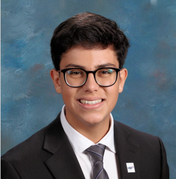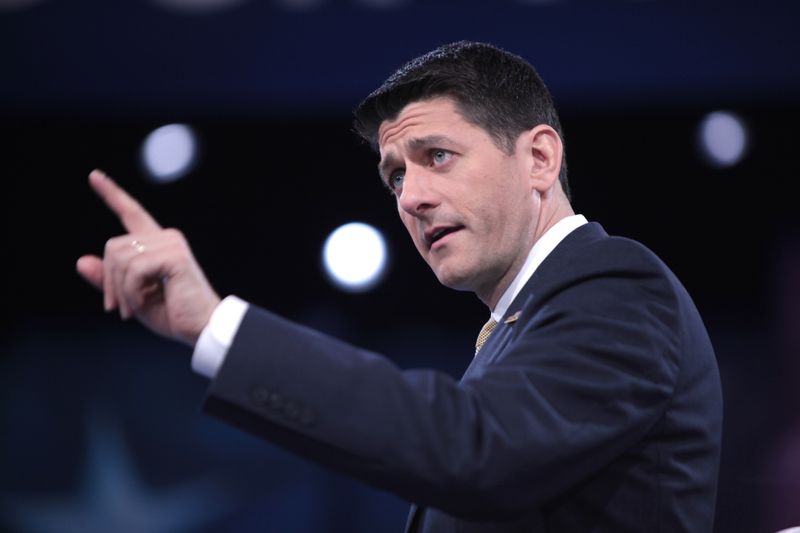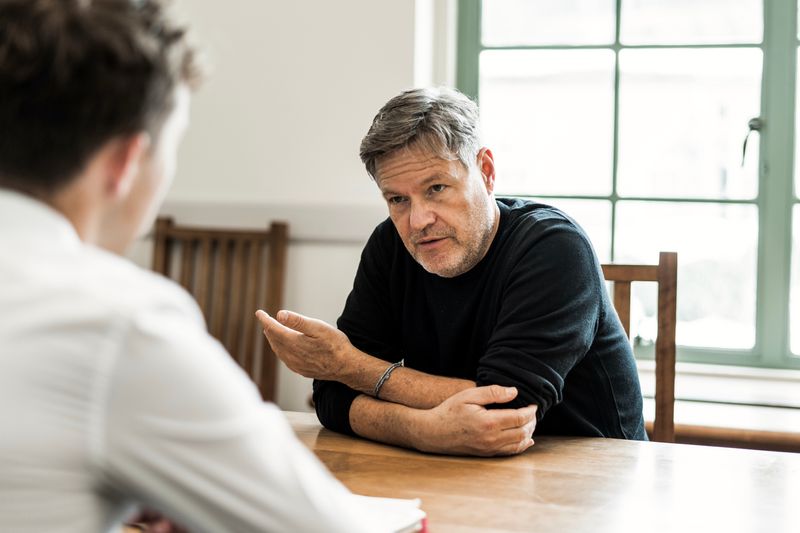
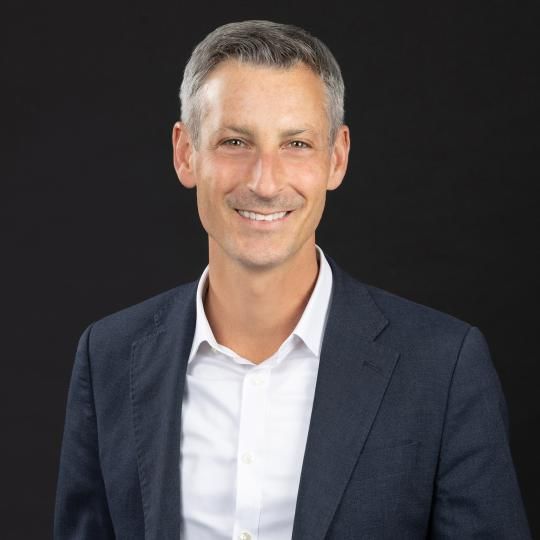
Ned Price was the Deputy to the U.S. Representative to the United Nations from 2024 to 2025, overseeing the U.S. Mission’s Washington office and serving on the National Security Council’s Deputies Committee. He previously served as State Department Spokesperson and Senior Advisor to Secretary Antony Blinken, and earlier held senior roles at the White House, CIA, and National Security Action. Price holds a Masters in Public Policy, International and Global Affairs from the Harvard Kennedy School and is a resident fellow for The Institute of Politics for Fall 2025.
You served as deputy to the U.S. Ambassador to the United Nations from 2024 to 2025. Just a few days ago, President Trump undermined the role of the United Nations in his speech at the General Assembly, asking “What is the purpose of the United Nations?” What, in your view, was your most defining responsibility or experience in that role? What do you understand the role of the ambassadorship and the United States in the UN to be and how did you hope to embody that?
The United States is an architect of the UN system. And this goes back to post–World War II, 1945, when countries of the world—really spurred on by the United States—came together to figure out how we could put in place a system of rules of the road to see to it that the world never came to blows like this once again. So, the UN, again with leadership from the United States, has been instrumental in developing the so-called rules-based order: the grandiose ideas that big states must not bully small states, that borders can’t be redrawn by force, and that states are entitled to their own sovereignty and territorial integrity.
That is not to say that those ideas haven’t been contested. However, because we have the UN and because we have the rules-based order that has sprung up from the UN system, there are consequences for violations of those rules. Just as we had this role as one of the architects at the very end of World War II, it is really incumbent on the United States to remain engaged in the United Nations, to see to it that this set of rules is enforced and actually refreshed.
One of the things we did was to put forward the first General Assembly resolution on artificial intelligence and to spell out, in a way for every single country—the 190-plus countries of the UN—how this technology that has both opportunity and risk should be used in a way that is free, open, transparent, and importantly, rights-respecting. How it could be used to buttress human rights and individual liberties rather than to restrain them.
I think that’s really emblematic of the type of work we tried to do there: to use this multilateral forum to promote the values that have always been at the heart of the rules-based order and its very lowercase “l” liberal view of the world: a world where people and ideas should be able to coexist and move freely and interact with one another without the type of coercion, intimidation, or use of force that marked the previous era.
My role there was sort of twofold. One was to lead our office in Washington, and we had a small team there because the U.S. ambassador in the last administration was a member of the cabinet and served as the U.S. Ambassador to the UN and, as a member of the cabinet, had a role in all the White House Situation Room meetings. It was my role primarily to represent her and to represent our mission in the Situation Room for those policy discussions. The other part of my job was helping with this work in New York and seeing to it that the values that the United States has long held dear, as well as the priorities that the Biden administration put forward in this multilateral venue, were really motivating our work.
From 2021 to 2023, you served as Spokesperson for the State Department — a role different from your CIA history where you represented an entire administration under pressure. Why did you choose to take on that role? What proved most difficult, most exciting, and most unique about it? What did you believe to be the importance of that job?
I was excited for that role, to have the honor and responsibility of that role, because it is a position that really platforms you as the voice of American foreign policy to the rest of the world. The White House is often going to be consumed with domestic matters or economic matters. It is the role of the State Department to speak first and foremost to the American people—to explain what we’re doing, why we’re doing it, and how we’re doing it—but also to explain to the rest of the world what our priorities are, what we’re doing, why, and how.
To be able to stand up there every single day and take questions from reporters, both from the United States and around the world, is an indispensable element of our democracy. It’s part of the system of accountability that we have, but it’s also an obligation that I feel we have to our own citizenry. Our responsibility is to make sure they’re informed so that they can make the right decisions, but also so that people around the world can have at least some understanding of what it is we’re doing and why.
It’s a job that is almost entirely substantive. You can look to other places in Washington where people take questions from reporters, and the questions are going to be political in nature. These questions are almost all about policy, which is a great challenge in some ways, because these are reporters who are steeped in our policy, and who have covered the State Department, in some cases, for decades. Yet, it really afforded me a full education in everything that we were doing. It afforded me a seat at the table to be part of these discussions. And I think, most of all, it required me to be on my toes and able to speak to what we were doing in the face of sometimes very difficult and challenging questions.
Before working at the UN, you served the National Security Council, serving as its spokesperson and as a Special Assistant to President Barack Obama. To the extent that you can, could you speak more on your specific role in the Obama administration, and how you worked to advance the administration’s goals?
I went over to the National Security Council from the CIA in 2014, and for almost three years I was on the National Security Council, importantly, always as a CIA officer, on loan to the White House National Security Council. My role was to serve on the strategic messaging team—working with the other teams within the National Security Council to think about how best to explain to the American public first and foremost, but also to publics around the world, our Congress, and other stakeholders exactly what we were doing and why.
Coming from the CIA, you sort of have a subset of issues—intelligence, counterterrorism—that are front of mind. When you go to the White House, it’s the entire oceanfront that you have to contend with in terms of the questions that are coming your way and the issues that you need to help your colleagues speak to and to speak to yourself.
I was then promoted to be the senior director, essentially the leader of that team, and then to be the spokesperson for the National Security Council, performing a function not unlike what I was doing at the State Department under the Biden administration, but doing that in the National Security Council.
One of the great things about working at the White House in the NSC is that you get a front-row seat, quite literally, to everything that the United States government is doing in terms of foreign policy and national security. You’re in the Situation Room for the meetings; you’re at the table. The Obama administration certainly recognized that for our messaging to be coherent and compelling, it had to be integrated into the policy process. It couldn’t be a separate process where the decision is made and then only later do we figure out how we talk about it publicly, how we engage with Congress, how we engage with other domestic and international stakeholders. It all has to be integrated. It was an especially interesting vantage point to see all those issues and to be part of the formula of policymaking.
You left the CIA in 2017 under the Trump administration. In your Washington Post op-ed, you condemned President Trump’s “doubt” of verified intelligence, his “delusional or deceitful” remarks on his first day at CIA, and the politicization of intelligence work as reasons for your departure. Looking back, do you believe those issues persisted through his administration? Did it impact you when you returned with the Biden administration? Do you see those same issues present in the Trump 2.0 administration today, and if so, have they worsened or improved?
Yes, unfortunately, I wish I could say today my warning I wrote about was premature. I wish I could say it didn’t actually come to fruition, that it was a false alarm, and everything was fine. That obviously is not what I believe, and that is not the case. I think most reasonable people would agree.
The language we saw from then-candidate Trump: when he compared our intelligence community to Nazis, when he dismissed the same high-confidence assessments that he is dismissing today. When he went to CIA headquarters on his first full day in office and stood in front of the wall that, if I recall, at the time had 117 stars for 117 officers who’d given their lives in the line of duty, and gave a very partisan set of remarks, essentially a campaign rally. And then took steps that further undermined the integrity of the process, including by at least for a time appointing his chief strategist, Steve Bannon, to the National Security Council.
To my mind, it was all part and parcel of a plan to dismiss and disregard the unvarnished and unbiased assessments that the intelligence community is there to provide him, without fear or favor, in favor of exactly what he wanted to hear and the worldview that he went into office having, and that he left office with still intact.
So yes, I unfortunately saw that throughout the four years of the first Trump administration. To jump to your third question, I think it is even, in some ways, more acute during this administration—the way we have seen the Director of National Intelligence especially weaponize her departments and agencies and really focus, it seems almost first and foremost, on taking political revenge against perceived enemies of President Trump far more than she seems to be confronting the geopolitical challenges we face, the transnational challenges we face, or seizing the opportunities that potentially await us. That has been chilling to see, and it is not akin to anything we saw during the first Trump administration. Yes, we saw a disregard for intelligence, but we didn’t see the same level of weaponization. I think that is incredibly dangerous, and we’re only going to see more of it, especially now that the Department of Justice and the FBI are in on the same.
When I went back into government President Biden and our team were determined to signal a very stark break with the Trump administration, an administration that had belittled and in some ways vilified our public servants. I was asked to go back to the State Department on day one of the administration. We immediately made it clear that the Secretary of State, the President of the United States, and everyone in between who wanted to hear the expert assessments of career professionals knew: politics weren’t going to play a role in our decision-making. It was going to be based on the national interests of the United States and the unvarnished, unbiased analysis of that national interest by, in many cases, career professionals.
For those four years, I think we did a very good job of living up to that. Now, of course, we find ourselves back in a familiar pattern with President Trump in a second term that is in some ways even more chilling than the first. But I think that we kept our word. President Trump campaigned on some of the very things that he’s doing, and I hate to say it, but in some ways, he’s also keeping his word about what he promised on the campaign trail.
The CIA has long been regarded as secretive, controversial, and misunderstood. Having built much of your career there, what do you think the public most fails to understand about the CIA?
I spent over a decade at the CIA, and I can tell you, during that time I was surrounded by the most patriotic, driven, committed professionals I’ve ever been around. These are people who are there, certainly not for the fame, not for the fortune, but because they are driven to serve their country. The same dynamic exists at the State Department and at other foreign affairs agencies. But there’s something almost unique about the CIA, given its history and its work.
Part of it is the tremendous responsibility that the American people place in it. We give our intelligence community, and especially the CIA, an awesome set of authorities and tools. The bargain we make is that they can have these authorities, but they will then be accountable to Congress and, of course, to policymakers in the executive branch as well. None of this, at least as it’s conceived, is a fully black box that has complete impunity. This is a system built on checks and balances. It wasn’t always that way, and I think we saw the excesses of the ’60s and ’70s.
We have seen really costly mistakes that the CIA has made since then. You can look at pre-war Iraq or some of the intelligence failures that contributed to the 9/11 attacks. The CIA, just like any other organization, is a learning organization. It has the ability to learn from those mistakes. I started there in the aftermath of the Iraq War and in the aftermath of 9/11. I saw firsthand how the agency had internalized some of those mistakes, but then I also saw firsthand how it was embarked on another program of excess in terms of the one to render, detain, and, in many cases, brutally interrogate suspected terrorists.
So, I understand why people are skeptical of the intelligence community. I think some of that skepticism should be directed at policymakers who direct the intelligence community to do these things, by and large. But the CIA is not without fault. It was not without fault in the ’60s and ’70s, and it’s not without fault in more recent years. I think the answer is more transparency and more accountability. And by transparency, I don’t mean the selective release of memos by the current DNI to say, “President Trump was right about everything, including the 2016 election.” I mean better insight into what the CIA and the intelligence community does, how it does it, and importantly, what it doesn’t do.
In regards to accountability, there does need to be oversight. That needs to come from the executive branch, and most importantly, it needs to come from the legislative branch. Even when you have the same party controlling the White House and both chambers of Congress, as we do now, members of Congress cannot shirk their obligations to conduct rigorous oversight of the intelligence community. Just because the president in office happens to share their partisan affiliation, it is a core responsibility that they have, and for them to give that up is not only unwise, but it’s also potentially quite dangerous.
You co-founded and directed National Security Action (NSA). On your website, you emphasize that “global engagement keeps us safer” and “strong alliances prevent conflict overseas.” Why did you start National Security Action, what impact did it achieve, and how does its mission continue in the Trump 2.0 era? Following up on this experience, what role does NSA hope the US has in global politics, conflicts, and roles? And how does this role recover when Trump leaves office?
We started this organization in the aftermath of the Obama administration and the first part of the Trump administration because we really saw it as what we called an ‘emergency moment.’ It was a moment where long-held assumptions about America’s place in the world were being called into question and, in some cases, torn completely asunder. Hence, we thought it was an important time to have an organization with experienced national security professionals who could serve as a resource to those who would be on the front lines helping to defend what is manifestly in the United States’ national security interests.
The work we did was in support of members of Congress, including in their conduct of oversight but also in terms of the affirmative vision that they were putting forward for America’s role in the world. We provided a lot of support to candidates running for office, both for Congress and, as we got closer to the 2020 elections, to those running in the primaries and ultimately to President Biden and his team. We provided a lot of support to fellow advocacy organizations, some of whom were steeped in foreign policy and national security, but some of whom were much more focused on domestic policy, so that they were able to tie the foreign and the domestic together.
We also did a lot of work in the communications and messaging space to try to provide a compelling vision of what would make America safest and most secure in the world, and, in turn, Americans safest, most secure, most prosperous, and healthiest in terms of how our country behaves on the world stage.
It’s hard to say in retrospect just how effective we were. Obviously, President Biden emerged victorious in 2020. I think elections are very rarely, if ever, won or lost on foreign policy. But I think to the extent we were able to make a positive contribution on the margin, we were able to do that. And a lot of the ideas we produced ultimately were a key element of the Biden campaign and then, more importantly, the Biden administration.
Being now at Harvard as a fellow for the Institute of Politics and having taught at various other institutions before, what comes now? What impact do you want to leave now? Do you have ambitions to return to the field of national security or do you see yourself as more impactful as an academic?
I think I see myself as a perennial public servant, and it’s always a regret of mine when I’m not able to be in government. My goal absolutely is to return to government. Now, that isn’t entirely up to me, and I expect it will be a few more years at least until I might have an opportunity, but I want to find myself back in the foreign policy and the national security realm.
If and when that happens, we’ll have a humongous task on our hands. Not a task of rebuilding, but almost a task of reconceiving and reconceptualizing what these structures look like and also, the vision of America’s role in the world.President Trump has, in some ways, provided us an opportunity not to start totally anew, but really to be ambitious in how we think about what makes our institutions, what makes America’s role in the world fit for purpose in where we are in the 21st century.
The most rewarding part for me, especially having primarily spent the past couple decades in D.C., is to be in a campus environment, surrounded by young people who still are driven, in many cases, by optimism and idealism, and in some ways that’s infectious.
Even when I’m down about the state of the world and what’s happening around us, I’ll meet with students who also aspire to work in government, who want to serve their country, and have that sense of passion about it, and that is, in turn, inspiring for me. Already, in my few short weeks here, I’ve learned a lot from the students I’ve been around.
Price spoke with Wulff on September 5, 2025. This interview has been lightly edited for length and clarity.
The views expressed in this piece are the interviewee’s own and are not reflective of the views of the HIR.