Today’s Turbulent Terrain
It’s 2025, and the echoes of war continue to linger across Eastern Europe. For three years, Russia has waged a full-scale invasion of Ukraine. Since its start in 2022, human losses in the ongoing conflict have continued to skyrocket for both sides. Beyond manpower, military equipment is also being rapidly depleted. Since 2022, Ukraine has lost over 1,100 tanks. For Russia, more than 1,400 main battle tanks (MBTs) and 3,700 infantry fighting vehicles (IFVs) and armored personnel carriers (APCs) have been destroyed. Along with these losses, Russia has reevaluated its nuclear policy, simultaneously leaning on forming new strategic partnerships to signal power abroad. But how exactly have these developments affected the security of other nuclear powers? More specifically, how has this nuclear proliferation altered pre-existing nuclear doctrines for other nuclear powers in Asia?
Nowhere are the answers to these questions more evident than on the Korean peninsula, an underrepresented terrain in discussions regarding the tense reality of the Russo-Ukrainian conflict. Both Pyongyang and Seoul have used the war as an opportunity to redefine, and in some cases double down, on their nuclear policies in response to Moscow’s wartime diplomacy, dynamics that will be analyzed in the following sections.
The Nuclear North
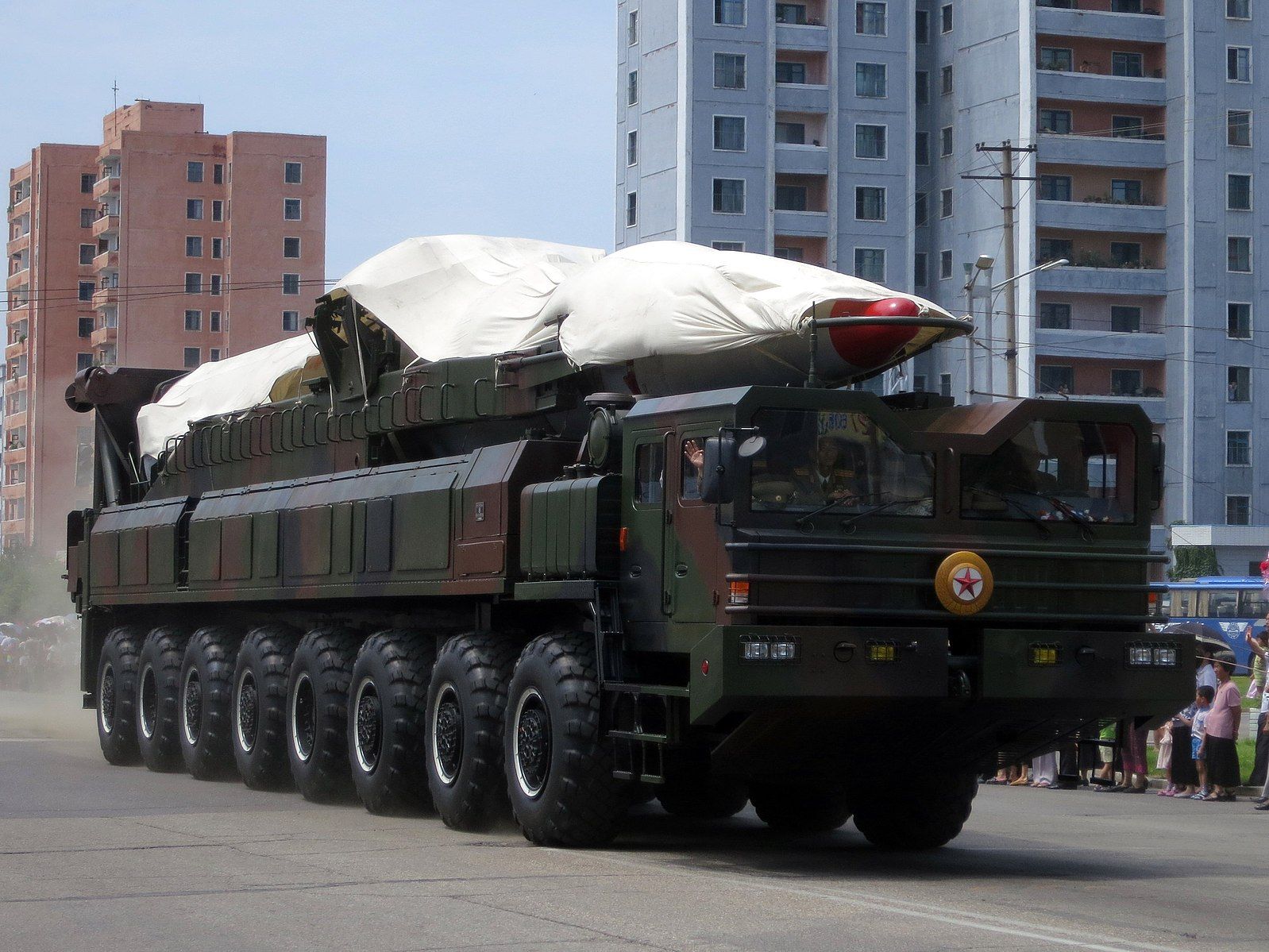
To understand the dynamics of nuclear politics across both Koreas, we must first look at the evolving partnership between Russia and North Korea amidst the war in Ukraine. During a 2024 visit with North Korean leader Kim Jung Un, Russian President Vladimir Putin signed the Treaty on Comprehensive Strategic Partnership. Aimed at bolstering Russia’s dwindling war efforts in Ukraine, the treaty has since provided Putin with up to 12,000 North Korean soldiers to fend off Ukrainian assaults. The recent partnership has also unlawfully supplied the Kremlin with more than 20,000 containers of North Korean missiles, artillery, rocket launchers, and munitions for the war, per a 2025 report published by the UN Multilateral Sanctions Monitoring Team (MSMT).
North Korean aid in the conflict is not only charity, however. In response to Pyongyang’s donations, Putin is strengthening North Korea’s nuclear capabilities, namely through the transfer of technologies for low-yield nuclear weapons and submarine-launch systems. Furthermore, Russia has also provided North Korean troops the opportunity to test their short-range ballistic missiles (SRBMs), more specifically the KN-23 missile, on the frontlines. These developments echo Putin’s focus on tactical nuclear weapons as a viable strategy for deterrence, subsequently embedding the atom into North Korea’s defense strategy.
This military partnership has sparked fears over advances to North Korea’s already growing nuclear program. Kim’s 2013 directive, the Byungjin Line, established nuclear development as a priority for North Korea’s defense sector, effectively integrating North Korea’s 50 nuclear weapons into the nation’s warfare and deterrence strategies. As such, recent technological exchanges with Russia are indicative of reinforcements to North Korea’s nuclear doctrine, this time on the global stage. The Russo-Ukrainian conflict amplified Kim’s nuclear and missile development and emboldened North Korea to adopt—and eventually constitutionalize—a new, aggressive nuclear doctrine under a 2022 law on the policy of nuclear forces. Under this law, North Korea’s threshold for deploying nuclear forces has been significantly lowered, even permitting preemptive nuclear strikes if the state perceives an imminent threat from a foreign country. This revised doctrine now permits an offensive, first-use policy, which significantly expands North Korea’s willingness to initiate conflict with South Korea. With a larger arsenal, Kim could even deter retaliation from the United States in the event of operations against South Korea.
Evidently, the war in Ukraine has exacerbated the recent nuclearization of North Korea. Empowered by statutory modifications and a fresh Russian alliance, North Korea’s nuclear politics continue to threaten the security of East Asia at heightened rates. North Korea’s brute doctrine of nuclear preemption and proliferation has been used to destabilize, terrorize, and undermine South Korea, further reflecting the shift in power on the peninsula since 2022.
Southern Strategy
Kim’s nuclear politics have not, however, been met with silence from its South Korean counterpart. To better understand South Korea’s response to developments in the Russo-Ukrainian conflict, it is essential to examine the nation’s foundational nuclear policies, followed by the breakdown of contemporary attitudes within South Korea on the use of nuclear weapons.
Following US diplomatic pressure in the 1970s, South Korea decided to abandon its nuclear weapons program. In 1992, it signed the Joint Declaration on the Denuclearization of the Korean Peninsula, where South Korea agreed not to test, manufacture, produce, receive, possess, store, deploy, or use nuclear weapons. The treaty also prioritized using nuclear energy for peaceful purposes, thereby outlawing the use of facilities for the enrichment of uranium. Instead of developing its own nuclear weapons, South Korea has long resorted to US extended deterrence for safety against North Korean threats, simultaneously bolstering its conventional forces to over 630,000 active personnel. South Korea’s lack of nuclear weapons has traditionally pushed dialogue favoring disarmament across the Korean peninsula, despite North Korea’s proliferation.
North Korea’s involvement in the ongoing Ukrainian conflict has increased talks over nuclearization within South Korea, as seen in a 2025 survey conducted by the East Asia Institute (EAI). The EAI found that 75.1 percent of all South Koreans favor further nuclear developments within the ROK—a 5 percent increase since the start of the war, and an increase of over 15 percent since the last six years. Popular sentiment is gearing South Korea towards nuclearization, but this trend isn’t exactly new. Before Russia invaded Ukraine in 2022, another set of public-opinion surveys found that South Korean support for independent nuclear armament in the nation lingered at about 61.4 percent. Directly following Russia’s invasion, this percentage of support increased by 4.7 points. In a presidential constitutional democracy like South Korea’s, these public support figures indicate increased pressure on lawmakers for revisions on existing nuclear policies, namely those of production, acquisition, and deterrence.
Consequently, in response to North Korean nuclearization and the aforementioned popular sentiment, South Korea has openly recognized the threat of ongoing partnerships within the Russo-Ukrainian conflict. During a Cabinet meeting following the deployment of North Korean troops to Ukraine, former South Korean President Yoon Suk Yeol denounced North Korea’s illegal military cooperation with Russia. Despite this growing threat, Yoon maintained national policy by claiming the ROK would not be developing its own nuclear weapons, but rather continue relying on cooperation with the US for deterrence. US President Joe Biden’s administration presented this cooperation in the form of reaffirming a US commitment to supporting South Korea through nuclear deterrence. It also followed Biden’s creation of a new Nuclear Consultative Group (NCG) with South Korea in an effort to discuss further nuclear strategy in the region. The creation of the NCG mirrored NATO’s response to the outbreak of war in Ukraine, where a NATO-Ukraine council was formed in 2023 to centralize international decision-making during the crisis. In short, US cooperation with South Korea seeks not only to counter Pyongyang but also to reflect broader lessons learned in the wake of Russian aggression in Ukraine.
To much dismay, however, the war in Ukraine, alongside the world’s limited ability to constrain Russian proliferation, has increasingly strained the credibility of US security guarantees. During the start of the second Trump Administration, US Secretary of War Pete Hegseth’s “Interim National Defense Strategy” memorandum highlighted deterring Chinese aggression in Taiwan as the main focus of US peacekeeping operations. For South Korea, this sparked fear that the United States would divert many existing resources away from the Korean Peninsula, or worse, neglect the commitments made under the Biden Administration.
This uncertainty, however, is not an option under South Korea’s strategy. South Korean President Lee Jae Myung has doubled down on promoting cooperation and arms control as a way to combat Kim’s Russia-backed nuclearization. Lee’s current E.N.D. (Exchange, Normalization, Denuclearization) policy seeks to respond to Russia-linked proliferation through long-term, step-by-step solutions. Denuclearization, as Lee presented it at the 80th UN General Assembly, focuses on pushing North Korea to suspend existing nuclear and missile development, reducing existing arsenals, and ultimately culminating in a vision of eliminating all nuclear weapons on the Korean peninsula.
Although investing in conventional and US extended deterrence remains crucial to South Korea’s defense strategy, Lee’s renewed emphasis on “peaceful coexistence and mutual growth” with North Korea highlights diplomacy as the primary mechanism for responding to the instability unleashed by the Russo-Ukrainian conflict.
The Koreas of Tomorrow
Three years into the Russo-Ukrainian conflict, the consequences of the war have reached far beyond Europe. The exchange of manpower, ammunition, and technology is increasingly visible between North Korea and Russia as a result of wartime tensions, reaffirming Kim’s position as the sole, and increasingly threatening, nuclear power on the Korean peninsula.
This war has produced fruitful relations between Kim and Putin, emboldening North Korea to increase its nuclear stockpiles. According to President Lee, North Korea’s current nuclearization efforts could be adding roughly 15 to 20 nuclear weapons to Kim’s arsenal each year. Despite this tension, South Korea’s response to developments in the conflict, namely the recent partnership between North Korea and Russia, seeks to maintain its position as a non-nuclear state while promoting peaceful dialogue with Kim’s regime. This doctrine prioritizes posing as small a threat to North Korea’s political and territorial sovereignty, particularly when it comes to Kim’s 2022 revision allowing for an offensive nuclear policy.
Hence, while North Korea is increasingly prepared to engage in nuclear conflict, South Korea will continue to prioritize diplomacy and dependence on US deterrence to minimize the risk of war. Relations between both countries currently remain frozen as South Korea seeks to foster dialogue with Kim’s regime, while North Korea, still uncertain of Western motivations, reasserts its strength with more nuclear signaling. With tensions at an all-time high between the US and Russia, the ripple effects of the Russo-Ukrainian conflict are rapidly changing the future of democracy, arms control, and power across the Korean Peninsula.