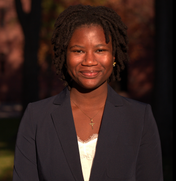
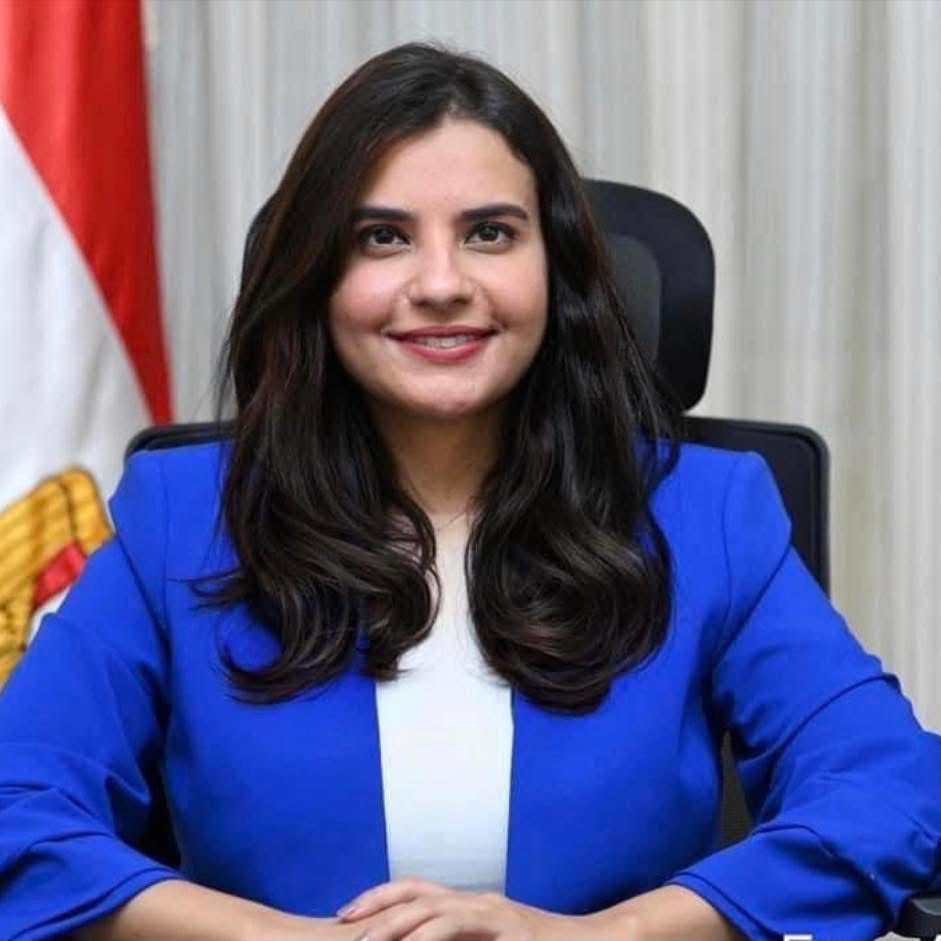
Sahar Albazar is a Member of the Egyptian Parliament, serving as Deputy Chair of the Foreign Affairs Committee and Chair of the Foreign Affairs Committee for Egypt’s majority party, Mostaqbal Watan. She previously served as President of the IPU Forum of Young Parliamentarians and was the founding Chair of the Women Parliamentary Council of the IMF–World Bank Parliamentary Network. She is a Young Global Leader of the World Economic Forum (2022), a Yale World Fellow, an Asia Global Fellow at Hong Kong University, and an Obama Leader representing Africa. She holds a Master in Public Administration from the Harvard Kennedy School.
Egypt is situated at the crossroads of major regional crises, from Sudan’s ongoing conflict to the humanitarian situation in Gaza. How is Egypt positioning itself as a stabilizing force in the region, and what diplomatic or humanitarian strategies are being prioritized today?
Egypt is located in a very strategic way. It is situated in the middle of several conflicts and wars in the Middle East. There is the civil war in Sudan, the conflict between Palestine and Israel, political instability in Libya, and then we are also impacted by Ukraine and Russia. So, [Egypt] exists in a very complicated region of the world [and] tends to position itself as a mediator, peacemaker, and negotiator in all these conflicts.
In Sudan, we negotiated, mediated, [and] helped in sending aid. We accepted refugees from Sudan, with almost a million Sudanese now living in Egypt after the war. As for the Israeli-Palestinian conflict, we are the main mediator, and that has been our role since the beginning of the Palestinian-Israeli conflict in 1948. We are trying to use our contacts with the Israelis, with the Palestinians, to maintain peace and stability in the Middle East. We also try to push for more aid to go into Palestine—that has always been our rule. Our mediation in the Israel-Palestine conflict is also always a strategic role with the United States. So, we represent the Middle East in the negotiations when it comes to communications with the United States.
We [have] succeeded many times in stopping the war and reaching a ceasefire. This time, it is taking longer than expected. The situation is getting more complicated because the Israeli government is stopping aid from entering, although we have tons of aid, not only from Egypt, but from the Gulf countries, the United States, European countries, and the United Nations. At the beginning of the Israel-Palestine conflict, countries wanted to help their own citizens flee Israel. Egypt helped foreign citizens leave Israel as long as the borders were open, and then we let aid into Palestine at the same time. Through this pressure and negotiation, we managed to make a bargain of getting aid inside and getting the foreign civilians who live in Israel to go out, whether it is foreigners in Israel or Palestine.
With Egypt undergoing significant economic reforms and negotiating with the IMF, how do you see the role of Parliament in ensuring both fiscal responsibility and the protection of vulnerable groups, especially amid rising inflation and subsidy cuts?
The role of the parliament is to invite the government to inform the parliamentarians about the latest negotiations and agreements with the World Bank and the IMF, because we do not attend the executive meetings ourselves as parliamentarians. If I'm attending the World Bank parliamentary network, I attend with parliamentarians, not with governments. Our role as parliamentarians [is] to be informed by the executive branch and then discuss it amongst ourselves.
I am the Deputy Chair for the foreign affairs committee, so we are responsible for International and bilateral agreements. We discuss it among ourselves as members. There is also the committee of the economy. They also negotiate, but from a more technical perspective, [considering] interest rates and years of the loan. Together, both committees attend [meetings] together, and they start discussing the proposed agreement or deal with the IMF, World Bank, or any other financial institution. [Parlamentarians] can make the decision of whether or not to accept it. We accept it when we see that the years or [loan] rates are smaller and that we have the capabilities in our budget to pay such amounts.
Unfortunately, we cannot foresee events that could impact such a deal. For example, our economy started to grow [around] 2015 [to]2016, and we started to get more loans from the IMF with less than 3 percent interest rate. But we got hit by COVID in 2020 and it hit our economy hard. Right after that, while we [were] trying to recover from the impact of COVID, we got hit by the Ukraine and Russian war. And for the people who don't understand the relationship between Egypt, Ukraine, and Russia, [Ukrainians and Russians] are the number one tourists to Egypt. So, they represent a core financial input into our economy. Firstly, their tourism rates began to decline. Secondly, both countries are the top export[ers] of wheat, and wheat is very important for our food production.
After the war started, we had to look for other countries [to provide] wheat. The situation was urgent because we did not want our people to starve or struggle to find food. As a result, we had to accept higher prices because we have long-term agreements with very stable rates with Ukraine and Russia. Now we have [higher] prices and rates, so it [has] also created pressure on our budget. That's how things get approved or managed when it comes to parliamentary work.
As Egypt invests in digital transformation and artificial intelligence, what steps should developing countries like Egypt take to balance the opportunities of AI innovation with the risks of surveillance, misinformation, and job displacement—especially in light of recent infrastructure vulnerabilities such as the Telecom Egypt building fire, yesterday?
I'm working on the AI bill in Egypt. I'm leading it because I belong to the majority party, so I work closely with the government. I see the risks of using AI in terms of the misuse of your personal data, and I feel a personal responsibility to work on protecting individuals when using technologies like AI. With respect to enabling innovation, [a developing country] shouldn't try to control everything. That's the mindset that we've been working with when it comes to the AI bill.
For example, I proposed to have a sandbox for innovation and investment in AI. The sandbox is a regulated environment where you can test technologies freely and in a safe way. And that encourages any foreign investor who wants to invest in a certain technology that one of the startups or the companies in Egypt is running.
[Additionally,] in a sandbox, I asked for watermarks. One of my fellow parliamentarians in the European Parliament was running for election, and then her opponent made a fake video of her using the technology. It destroyed not only her political life, but her personal life. Until they investigated and found out that it was a fabricated video, the news did not go viral [to the same extent] as the wrong one. This makes women, children, and other vulnerable people at risk from fake or deep fake videos, and that's why I was very clear. We need to have watermarks.
[As] for job replacement [in relation to] AI, Egypt is doing huge work in providing courses, workshops, and educational degrees in AI for college students to prepare them for future jobs. As a member [of] the high advisory level to the Vice Prime Minister for development I proposed [an] AI curriculum in schools for children because it's the future. And luckily, a week later, the President himself endorsed the idea. The Education Minister is now working on how to include AI in the curriculum, but in a very safe way. We will teach you the risks and how to use it, such that you can use it creatively in your own life and have an easier time finding a job in the future.
I also work across Africa to make sure that African countries exchange views and knowledge about the bills for AI. I work not only in Egypt, but also at the African level.
Drawing on your experience at the World Bank, Egypt’s Ministry of Social Solidarity, and the IPU, what do you consider the single most underestimated obstacle to sustainable development today, and how can policymakers better address it?
I feel that we need to focus more on waste management. We need to find more ways of enforcing policies and attracting investment in that field. Another obstacle is underestimat[ing] the country. Because we have bio waste, we have regular garbage waste. Egypt has 27 governorates. We don't have units for waste. The Waste Management in each governorate is in charge of waste management for that area. And if we did that, it actually would help each governor, each governorate [optimize], because you can recycle it, you can have products out of it. You can create jobs out of it. So it's an untapped sector that I think we need to focus more on. We can also use tech waste, laptops, USBs, to recycle and create more jobs.
As a global leader and role model, what advice would you give to young women aspiring to break into politics and global policy?
Be true to yourself. Don't lose yourself in the way. Always remind yourself, Why am I here? Why did I choose to be here? You're not after positions. I think whoever intentionally wants to join this field, especially women, wants to make an impact. So always remind yourself why you are here. Why are you entering this field?
The second thing is, don't stop educating yourself. If you stop, the world will pass you. You need to always [keep up to date]. You need to read, even if it's not your field. I'm not a computer science graduate, but I'm working on a bill for AI. I keep educating myself in different fields, and I think that is what makes you stand out in your performance as a politician. When you stand out as a politician, you will be recognized globally because of your insights, because of your adding value in whatever platform you [have].
Thirdly, and this is something that I am not yet successful in, but whoever wants to join the political sphere needs to make sure they create a work-life balance. When you have “me time” [or] time for reflection, and you are doing something that you personally love, it recharges you. That [personal time] will help you further your performance at work. For example, I like to paint. However, in my five years as a parliamentarian, I [have] only painted 10 [or] 15 paintings, and that's very minimal [for me]. I hope that I can do more. [Overall], it's important to have time for yourself.
Albazar spoke with Dake on July 9th, 2025. This interview has been lightly edited for length and clarity.
The views expressed in this piece are the interviewee’s own and are not reflective of the views of the HIR or the author.